 Dream Decoder
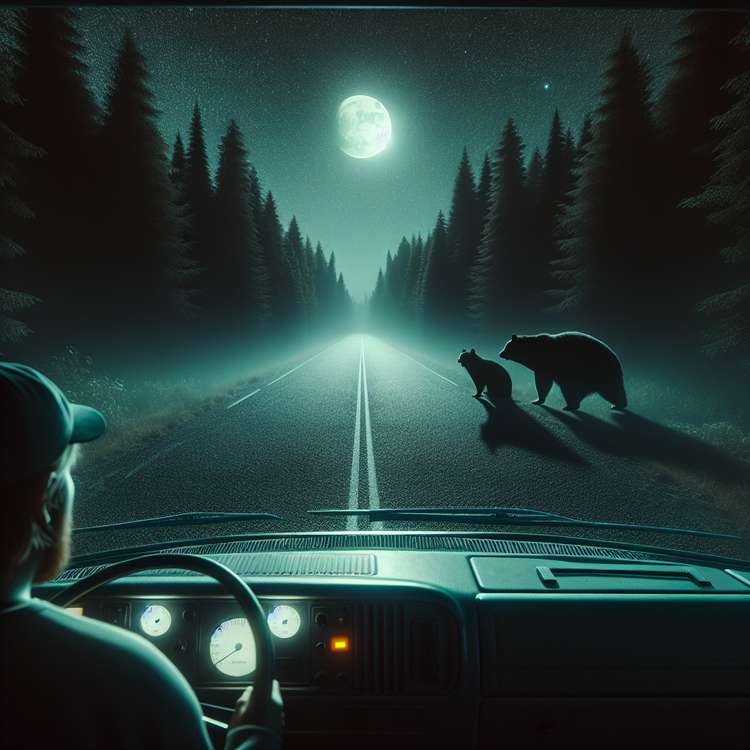
Driving alone at night in a nightmare often points to feeling responsible for where your life is going without a clear view of what comes next. The driving suggests decisions you have to make, while the darkness and being alone can sharpen a fear of making them without enough information or support. It does not mean something bad is about to happen.
What happened in the dream?
One dreamer described driving a van along a road through a forest at night, unable to see far beyond the headlights. A bear appeared near the roadside, and the dreamer could not decide whether to slow down or keep going. Even after the immediate danger passed, they felt drawn toward the trees and afraid to leave the van.
The useful details are not just the bear or the dark road. The dreamer was at the wheel, had to respond quickly, and still felt unsettled when there was a chance to stop. If your dream had no bear, focus on whatever made the drive feel unsafe: a bend you could not see around, an empty road, a vehicle that would not respond, or simply the knowledge that nobody else was there.
What does driving alone at night usually mean?
You are making a decision without a clear answer
This reading may fit if you are weighing a move, changing jobs, or deciding whether to end a relationship. You can keep moving, but you cannot see the whole route yet. Ask whether the fear in the dream came from the road itself or from having to choose your next move before you felt ready.
You are carrying a responsibility by yourself
A deadline, caring for a parent, or managing a household problem can make the driver’s seat feel familiar. In the dream, nobody can take the wheel or tell you what is ahead; in waking life, you may be the person others expect to handle things. Being alone does not necessarily mean you lack people who care—it may mean you have not been able to share this particular burden.
You are alert for a problem you cannot identify
If the strongest feeling was watching the roadside for danger, consider a week marked by uncertainty: waiting for test results, an answer about a job, or news about someone you care about. The bear, if one appeared, may give that vague anticipation a visible shape. Its presence matters more than any fixed meaning assigned to bears, especially if it never actually attacked.
These readings can overlap. A person facing a move might also feel solely responsible for the decision and unsure what awaits them. The best fit is the one that connects to a specific pressure in your week, not the one that sounds most dramatic.
Which details change the meaning?
- A familiar road: If you knew exactly where you were, the nightmare may be less about an unknown future and more about a familiar obligation that has recently become harder to handle.
- An unfamiliar road or forest: This can emphasize having too little information. Think of a new role, a move, or a change in plans where you have not yet learned the route.
- A van rather than a small car: A larger vehicle may make the task feel less nimble or more consequential, particularly if you associate vans with carrying other people or their belongings. Your own associations with the vehicle matter more than its standard dream meaning.
- Family nearby, even if you felt alone: Their presence may shift the question from “Who will help me?” to “Who am I trying to keep safe or avoid disappointing?” Feeling alone while others are present is a detail worth noticing.
- A bear that stays beside the road: A visible threat that does not approach may reflect anticipation more than an immediate crisis. If you swerved or lost control anyway, your reaction may be the part of the dream that stayed with you.
- Reaching a safe place—or waking before you do: A safe arrival can suggest you found a way through the fear within the dream. An abrupt ending may leave you focused on the unfinished choice, even if nothing happened on the road.
The feeling can change the reading as much as the scenery. Fear while gripping the wheel differs from frustration at being delayed, or relief at finally pulling over. When you recall the dream, name the feeling before trying to assign a meaning to every object.
What do other dreamers report?
In dreams recorded in Dream Decoder, “driving” appears in 34 dreams. The emotions people tagged most were anxiety (35%), fear (18%), confusion (18%), and frustration (18%); 6% of those dreams were nightmares. Driving appeared alongside a bus in 8 dreams, a car in 7, a friend in 6, and family in 3.
“Alone” appears in 19 dreams recorded in Dream Decoder. Its most common emotion tags were fear (32%), isolation (32%), panic (21%), and anxiety (21%); 16% of those dreams were nightmares. It appeared alongside a friend in 3 dreams and dark in 3.
These small sets of recorded dreams are not a survey of everyone who dreams about driving or being alone. They do suggest why this combination can feel especially uncomfortable: driving was often tagged with uncertainty or strain, while being alone was often tagged with fear or isolation. The figures cannot tell you what your particular road, vehicle, or passenger means.
What should you ask yourself about this week?
- What decision am I trying to make with information I do not yet have, and when do I expect to know more?
- What did I have to handle on my own this week, even if other people were nearby?
- Did anything yesterday make me feel rushed to respond—a message, a deadline, or an unexpected request?
- If there was a threat beside the road, what am I watching for in waking life? Has it happened, or am I bracing for it?
- What was the hardest moment: continuing to drive, choosing a direction, stopping, or getting out? Where did that same feeling show up recently?
What can you do with the dream now?
First, write down the scene in a few lines, including the moment you felt most afraid and what you felt when you woke. You do not need to reconstruct every detail; the emotional turning point is usually more useful than a complete inventory of symbols.
Next, note what happened the day before the dream. Look for a concrete link, such as an awkward conversation, a difficult drive, a pending decision, or an evening spent worrying about someone. If nothing fits, leave that question open rather than forcing an explanation.
If the same nightmare recurs, you can try rewriting its ending while awake: picture yourself finding a place to pull over, turning onto a well-lit road, or calling someone to meet you. This is a version of imagery rehearsal—a way to practice a less frightening sequence, not a test of what the dream predicts. The aim is to give yourself another ending to imagine when the old one keeps returning.