 Dream Decoder
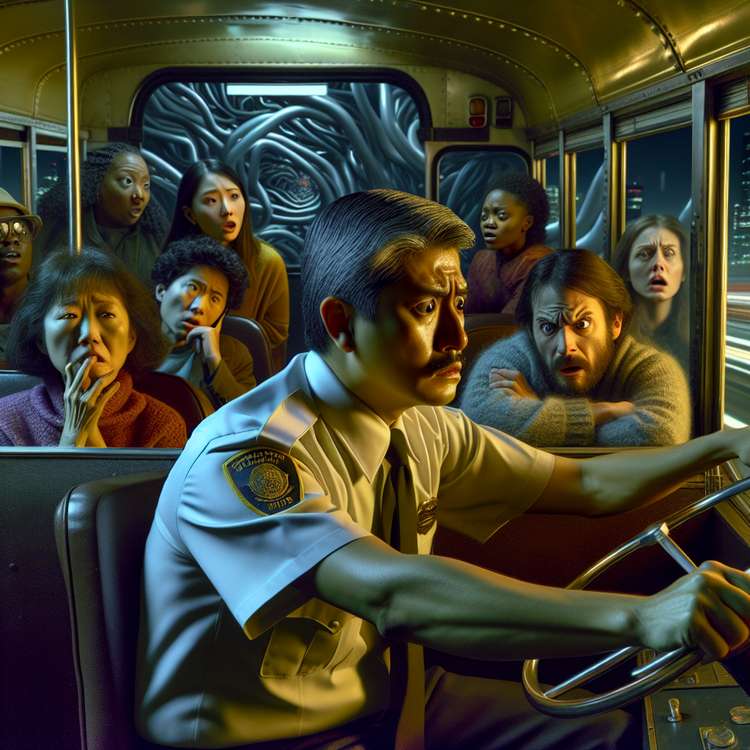
A dream about an unsafe bus ride or suddenly having to drive the bus often points to pressure around responsibility: something is moving forward, but you may not feel able to control its pace. The bus can also bring other people’s expectations into the picture, especially if you feel responsible for getting everyone somewhere safely. It is not a prediction of an accident.
What happens in the dream?
One dreamer described boarding a bus that began moving too fast. They tried to reach the driver as it swerved, then found themselves at the wheel, frightened that the bus might tip over before waking.
The striking change is from passenger to driver. At first, someone else sets the speed; then the dreamer must steer without time to prepare. If that shift sounds familiar, ask whether a responsibility recently landed on you unexpectedly, or whether you have been trying to influence a decision that someone else controls.
The bus matters too. Unlike a car, it carries a group along a route that may already be set. A dream like this can capture the tension between what you need, what the group expects, and how quickly events are unfolding. The strongest clue is not the vehicle alone but the moment your fear rises: while trusting the driver, approaching the front, or taking the wheel.
What does bus driving anxiety usually mean?
A schedule you cannot slow down
If you have a work deadline, exams, or a move coming up, the speeding bus may echo the feeling that each day brings you closer whether you are ready or not. This reading fits especially well when the route seems fixed and you spend the dream trying to make the driver slow down. The useful waking-life question is whether there is one part of the schedule you can renegotiate, even if you cannot stop the larger change.
Responsibility for other people
Driving a bus can feel different from driving alone: passengers are relying on you. If you are organizing a family event, leading a team, or caring for a parent, finding yourself at the wheel may reflect the weight of making choices that affect others. Fear in this version does not mean you are incapable; it may simply match how high the stakes feel this week.
Uncertainty about who gets to decide
If a partner, manager, or family member has been making decisions that affect you, beginning as a passenger may resemble having little say. Taking the wheel could suggest a wish for more input, but the anxiety may show that taking charge has costs of its own. The continuity hypothesis—the idea that dreams often draw on waking concerns—offers one way to understand this without treating the dream as a coded message.
These readings are alternatives, not a checklist. A rushed commute you took yesterday could also supply the bus and the speed, while an unrelated concern supplies the feeling. Start with what was happening in your life before you assume every detail needs an interpretation.
How do the details change the meaning?
- You are a passenger the whole time: The focus may be on trusting someone else’s judgment, especially if you cannot reach the driver or ask to get off. Consider a decision at work or home that affects you but is not yours to make.
- You are told to drive without warning: An unexpected assignment, a change in caregiving duties, or a colleague’s absence may be closer to the dream than a general fear of driving. Notice whether anyone helps you learn the controls.
- People you know are on board: Their presence may point toward a shared situation, such as a family plan or team project. It need not mean the dream is about those people individually; ask what you feel responsible for when they are watching.
- The bus is near school or on a familiar commute: The setting may connect the anxiety to a specific routine, expectation, or place from your past. If it resembles yesterday’s journey, ordinary memory may explain much of the scene.
- The bus swerves but reaches a stop: The fear may be about anticipating disaster rather than experiencing one. A safe ending is worth recording too, particularly if you woke before you had a chance to register it.
- You feel angry instead of frightened: Frustration may put the emphasis on delays, poor decisions, or being made responsible for a route you did not choose. That points to a different question than fear does: what would you like to challenge or change?
What do dreamers report?
In dreams recorded in Dream Decoder, bus appears in 39 dreams. The most commonly tagged emotions for those dreams are frustration (33%), anxiety (28%), confusion (21%), and fear (18%); 8% were nightmares. Bus appeared together with driving in 8 dreams, school in 5, phone in 4, crush in 3, and fight in 3.
Driving appears in 34 dreams recorded in Dream Decoder. Its most commonly tagged emotions are anxiety (35%), fear (18%), confusion (18%), and frustration (18%); 6% were nightmares. Driving appeared together with bus in 8 dreams, car in 7, friend in 6, and family in 3.
These figures suggest that frustration and anxiety are both common ways dreamers describe these symbols, while most of the recorded dreams were not tagged as nightmares. They do not tell us what your dream means or establish how often people in general have it. Use them as a reminder to name your own feeling accurately: being afraid of a crash and being annoyed that no one will slow down are different experiences.
What should you ask yourself?
- What was moving too quickly this week—a deadline, a decision, a change at home, or something else?
- In the dream, was I most uneasy when someone else drove or when I had to take over? Where did I feel that same tension recently?
- Who, if anyone, did I feel responsible for getting safely to the destination? Does that match a real obligation I have now?
- Did a bus ride, driving incident, conversation, or piece of media the day before provide any of the dream’s concrete details?
- If the bus could have stopped, where would I have wanted to get off or ask for a pause in my week?
What can you do with the dream?
First, write down the scene soon after waking, including the feeling at its most intense point. Record whether you were a passenger or driver, who else was there, and how the ride ended. Those details are easier to compare later than a broad note that you had a stressful dream.
Next, note what happened the day before: a rushed trip, an approaching deadline, a difficult conversation, or a new task. You do not have to force a match. If one connection stands out, identify a small waking-life action you can take, such as asking for a clearer schedule or telling someone you need help with a shared responsibility.
If this becomes a recurring nightmare, you can try rewriting its ending while awake. Imagine the bus slowing, pulling over, or another driver helping you, and spend a brief moment picturing that version. This is an imagery-rehearsal approach to changing the story you revisit, not a way to predict what will happen.