 Dream Decoder
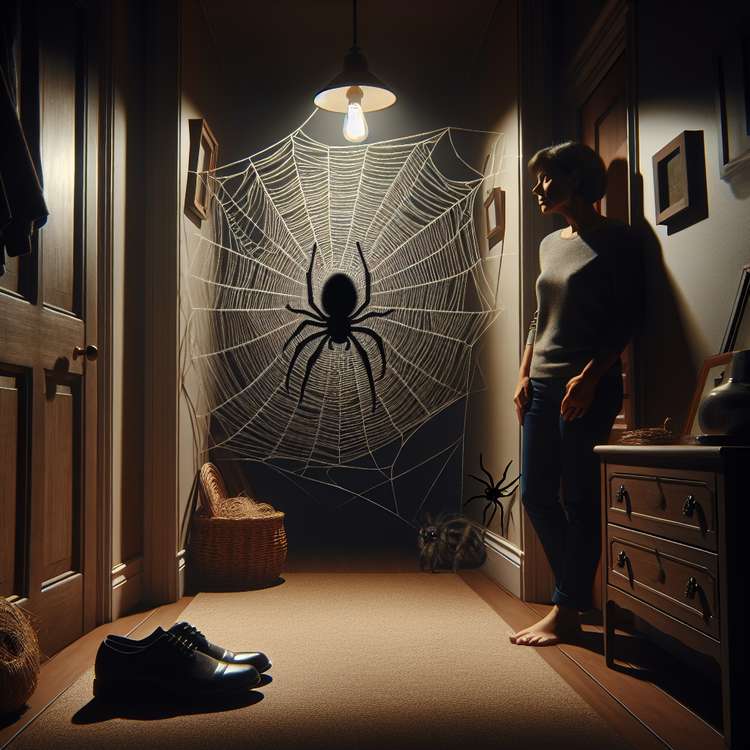
A spider in the house dream often points to a worry that feels too close to home: a problem you cannot easily ignore, even where you expect to feel comfortable. The spider may stand for a specific fear, while the house can reflect your private life, your routines, or the people you live with. The strongest clue is usually what you felt you had to do when you saw it.
What happened in the dream?
One dreamer described finding a spider and its web across a hallway at home. They picked up a shoe, but the spider seemed to grow, their hand moved slowly, and they rushed toward the door before waking frightened.
The setting matters as much as the spider. A hallway is a route between rooms, so a web there turns an ordinary movement into something the dreamer must confront or avoid. The shoe is also worth noticing: it is a familiar object pressed into service because the dreamer wants to act quickly.
The slow hand and sudden dash capture two different responses to fear. If that shift feels familiar, ask whether something this week has left you hesitating before you could take action. The dream does not tell you what the problem is; it gives you a vivid picture of how a problem felt.
What does a spider in the house usually mean?
A small problem has become hard to ignore
A spider is easy to overlook until it appears in a place you use every day. This reading may fit a looming deadline, an overdue bill, or a difficult message you keep putting off: the task itself may be manageable, but anticipation has made it feel bigger. If the dream spider grew as you watched, consider whether your worry has grown in the same way while the practical facts stayed much the same.
You feel on guard in your own space
The house can point to home life rather than to danger from outside it. During a move, a disagreement with a housemate, or a stretch of caring for a parent, even quiet time at home may come with demands. House dreams need not mean something is wrong with the building; here, the useful question is whether you have had room to relax in your usual surroundings.
You are unsure whether to face or avoid something
In the scenario, the dreamer reaches for a shoe and then runs. That push and pull can resemble a waking situation such as preparing for a hard conversation after a breakup or deciding how to respond to criticism at work. If you already know you dislike spiders, though, the image may also be fairly literal: your dream can use a fear you already have to create a convincing threat, without assigning the spider a hidden message.
How do the details change the meaning?
- The spider blocks a doorway or hallway: Notice what you were trying to reach. A blocked route may fit a decision or task that seems to stand between you and the next part of your day.
- It appears in your bedroom: The worry may feel less contained, especially if bedtime has become a time when you think about unfinished responsibilities. Pay attention to whether the room felt familiar or strangely altered.
- Someone else is in the house: Their response may matter more than their identity. If they help, ignore the spider, or tell you to handle it alone, compare that with how supported you have felt this week.
- You trap or remove the spider: A calmer ending can point to a sense that you have options, even if you felt frightened at first. What changed between noticing it and dealing with it?
- You cannot move, then escape: The delay may echo feeling stuck before an appointment, deadline, or conversation. The escape shifts attention to relief: did getting away solve the problem, or only end the immediate fear?
- You feel curious rather than afraid: Spider dreams are not always about threat. If you watched the spider without panic, its web or presence may have held your attention because something in waking life feels intricate or unfinished.
What do dreamers report?
In dreams recorded in Dream Decoder, house appears in 127 dreams. Among the emotions people tagged for those dreams, anxiety accounts for 34%, fear for 32%, confusion for 17%, and frustration for 12%. Those tags suggest that a house in a dream is not automatically a comforting setting; many dreamers report unease there.
House most often appears alongside mother (11 dreams), family (10), friend (9), water (6), and door (5). These pairings show how often the setting appears with people or familiar points of passage, though they do not tell us what any one house dream means. A door, for example, might be an exit, an entrance, or simply part of the room the dreamer remembers.
In that same set of house dreams, 9% were nightmares. If your spider dream frightened you, you are not unusual, but the figure does not mean that house dreams generally become nightmares. The app figures describe recorded dreams, not a rule for predicting your next one.
What should I ask myself about this dream?
- What was the first feeling I had when I noticed the spider: alarm, disgust, curiosity, or concern for someone else?
- What has felt intrusive at home this week, even if it is an ordinary responsibility rather than a person or an event?
- Is there a specific task I have been avoiding because thinking about it feels worse than doing it?
- Who, if anyone, was available to help in the dream, and how does that compare with the support I have asked for lately?
- What did I want on the other side of the hallway or door, and does it remind me of something I am trying to get to in waking life?
What can I do with the dream now?
First, write down the sequence while you remember it, including the feeling at each turn: noticing the spider, reaching for the shoe, hesitating, and heading for the door. You do not need a perfect account. A few concrete details can help you see whether the dream was mainly about the spider, being unable to act, or wanting to get somewhere else.
Next, note what happened the day before. A deadline, a spider you actually saw, an awkward conversation, or a restless evening could all give the dream material; none needs to be the single correct explanation. If one waking concern stands out, name one small, practical thing you can do about it, rather than treating the dream as an instruction.
If the same frightening dream keeps returning, you can try rewriting its ending while awake. Picture yourself turning on a light, getting help, or walking past the spider safely, then spend a little time imagining that new version. This is a way to explore a different response to the dream, not a guarantee that you will dream it next time.