 Dream Decoder
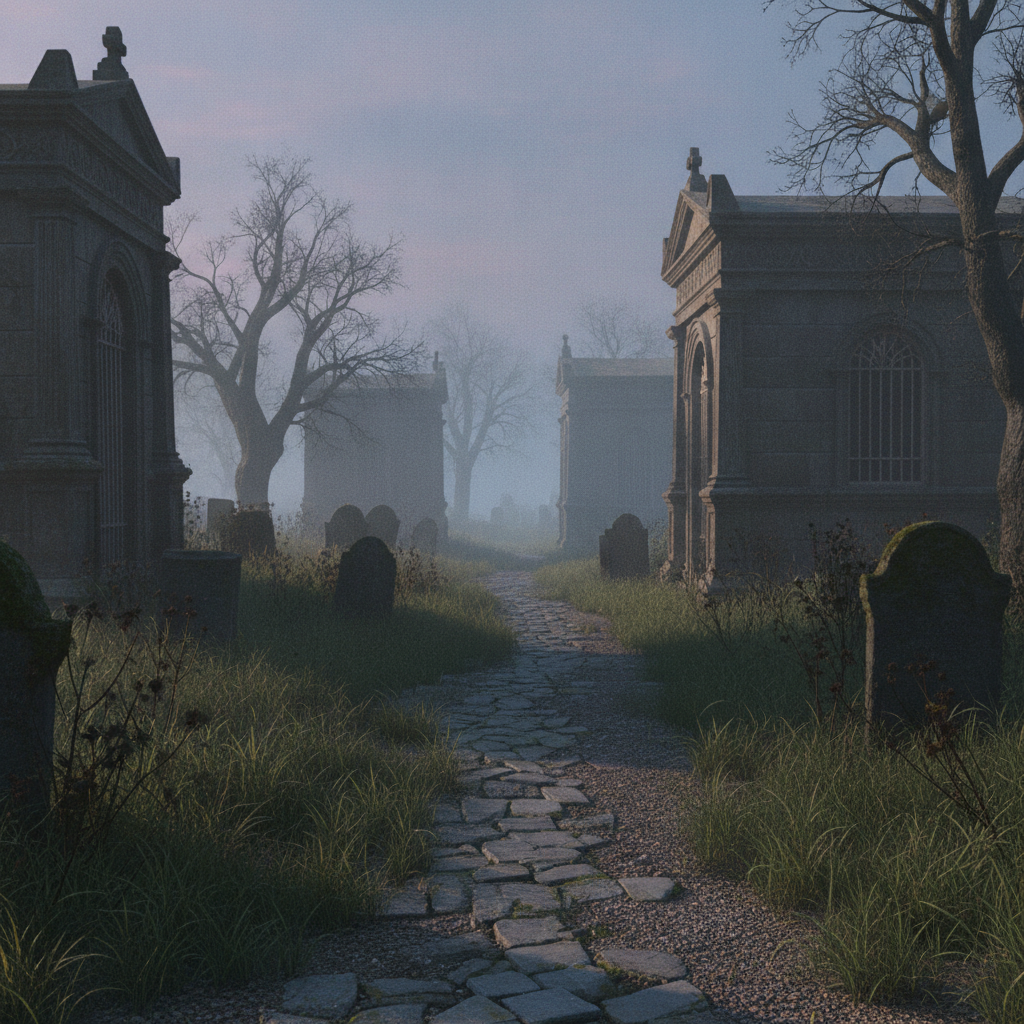
A graveyard dream that leads you to your family’s graves often points to remembrance, grief, or concern about the people you love. The graves may represent what cannot be changed, while your choice to visit them suggests a wish to keep a family connection present. It does not mean a death is about to happen.
What happened in this dream?
One dreamer described standing among many graves, with no one dying in the dream. They walked through the graveyard until they found the resting places of their own family members. The scene felt sad and nostalgic rather than focused on a single frightening event.
The important action is the search: the dreamer did not stay among strangers’ graves but went looking for familiar ones. That shift can turn a broad thought about death into a more personal question about someone missed, a family story, or the passage of time in their own life.
Notice, too, that the dreamer found the graves. If you woke with a sense of relief, reaching them may have felt like recovering a connection; if you woke unsettled, finding them may have made an absence harder to ignore. The feeling at the end is often more useful than the number of graves or the size of the cemetery.
What does it usually mean?
You may be missing someone
If an anniversary, birthday, photograph, or conversation brought a deceased relative to mind this week, the family graves may give that memory a place to go. You might feel sadness in the dream even if you spent the day feeling mostly fine. Visiting the graves can express a wish to remember that person deliberately, rather than letting the thought pass.
This reading also fits when a loss happened years ago. Grief does not have to be new to appear in a dream, and nostalgia can sit beside warmth or gratitude. Ask whether you were looking for one particular person, even if the dream showed several family graves.
A change may be making you think about where you come from
A move, graduation, breakup, or new job can create distance between your current life and the family life you knew before. In that situation, finding your family’s graves may reflect a search for continuity: which values, habits, or memories still feel like yours? The dream is not necessarily asking you to return to the past; it may be showing what you want to carry forward.
This is especially plausible if the graveyard felt quiet rather than threatening. The familiar section might have offered a point of orientation in an otherwise crowded place. Consider whether a recent decision has made you think about what your family would say or what they taught you.
You may be worried about family who are still here
Caring for a parent, hearing that a relative is unwell, or struggling to find time for visits can make family feel vulnerable. The dream may express that worry by placing your attention on graves, even though the people on your mind are living. It is a feeling to recognize, not a forecast about them.
Sometimes the useful question is practical: have you been wanting to call someone, make a plan, or say something kind? You do not have to treat the dream as an instruction. It can simply draw your attention to a relationship that matters to you right now.
Which details change the meaning?
- You searched for a long time before finding the family graves. A difficult search may fit a week when family memories feel distant, or when you are unsure where you belong after a change. The eventual discovery may matter as much as the difficulty.
- You knew exactly where to go. A direct route can suggest that a particular person or memory has already been on your mind. Rather than asking what the whole graveyard means, think about why you were drawn to that family section.
- A living family member walked beside you. Their presence may point toward a shared history or a conversation you want to have. How you felt with them—comforted, tense, or silent—can help distinguish closeness from unresolved worry.
- The family graves were empty, missing, or hard to read. That difference can shift the focus toward uncertainty: a story you do not know, a relative you have lost touch with, or a memory you are afraid of forgetting. It need not imply anything about an actual grave.
- You felt calm despite the setting. Calm can make the visit feel more like acknowledgment than alarm. If sadness was present too, the dream may hold both the fact of loss and the continued value of the relationship.
- You woke before reaching the graves. An unfinished visit may fit something you have postponed, such as looking through family photos or asking a relative about the past. It may also reflect an interrupted dream, so look for a waking-life connection before assigning it weight.
What do other dreamers report?
In dreams recorded in Dream Decoder, “family” appears in 169 dreams. The emotions people tagged most often in those dreams were anxiety (37%), fear (22%), frustration (14%), and confusion (14%); 8% were nightmares. These figures show that family dreams in this collection are not always comforting, even when the dreamer cares deeply about the people involved.
Family was most often dreamed together with death (11 dreams), house (10 dreams), father (10 dreams), home (9 dreams), and money (6 dreams). Those pairings suggest that family can appear alongside loss, familiar places, relationships, and everyday pressures. They do not tell us how common this exact graveyard dream is, or determine what your particular family graves mean.
What should you ask yourself?
- Did a date, message, photo, or conversation this week remind me of someone in my family who has died?
- Was I looking for a particular relative in the dream, and what feeling came up when I reached their grave?
- Have I recently moved, made a decision, or ended a relationship that changed how close I feel to family?
- Am I concerned about someone living, or have I been putting off a call or visit?
- Did finding the graves feel comforting, sad, frightening, or unfinished—and when did I last feel something similar while awake?
What can you do with this dream?
First, write down the scene and the feeling that stayed with you on waking. Include whether you found a specific person’s grave and whether the visit felt like an arrival, a goodbye, or simply a pause. Those details will help you compare this dream with any later ones without forcing a meaning immediately.
Next, note what happened the day before: a family conversation, a reminder of an anniversary, news about a relative, or even an ordinary task that brought an old memory back. If someone came to mind, you might choose a small act of remembrance or connection, such as sharing a story or sending a message. Do it because it feels worthwhile, not because the dream predicts a problem.
If this becomes a recurring nightmare, try rewriting its ending while awake: picture yourself finding the graves, feeling safe, and leaving when you are ready. This waking exercise, sometimes called imagery rehearsal, gives you another version of the scene to imagine. You can also leave the dream alone if it feels like a passing moment of sadness rather than something you need to act on.