 Dream Decoder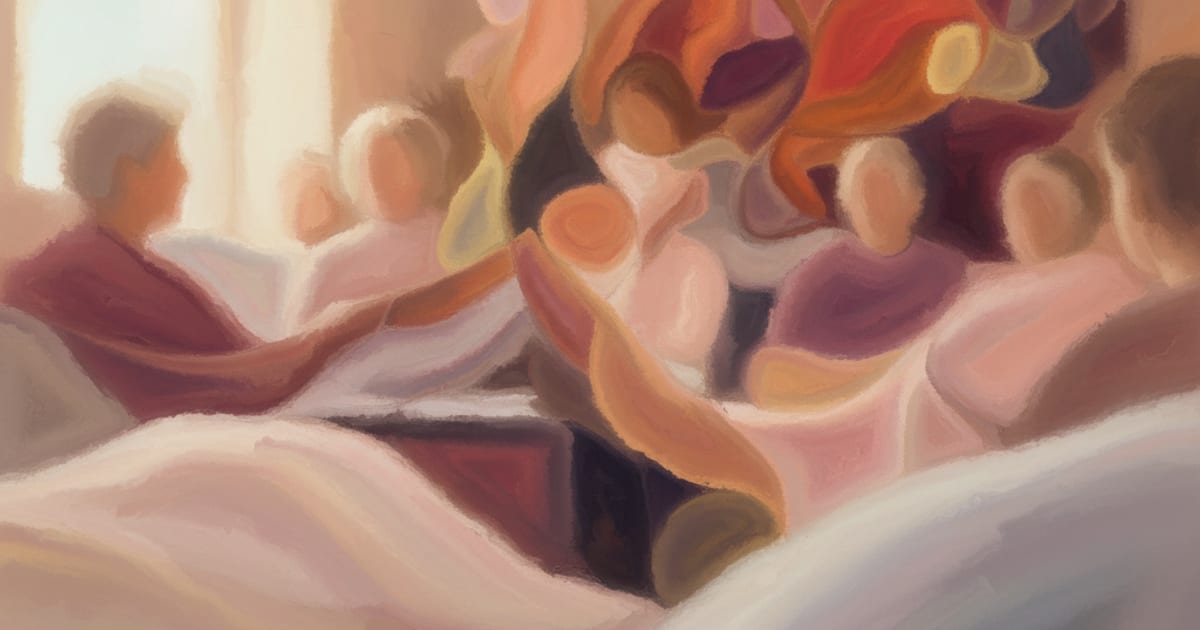
Dreams are fascinating visitors, aren't they? Sometimes they arrive cloaked in mystery, leaving us pondering their enigmatic symbols. Other times, they replay our deepest anxieties, holding up a lamp to the unspoken fears that reside within. But then there are those rare and profound moments when a dream acts as a gentle, yet insistent, guide, illuminating the intricate pathways of our emotional lives. They invite us to explore the hidden currents of our experiences, especially when we’re navigating the beautiful, often challenging, terrain of shared lives and evolving family dynamics.
Life’s journey often leads us to situations where our world intertwines with others in profound ways. We build connections, forge partnerships, and sometimes, find ourselves integrating into a tapestry woven with existing threads. These moments, while rich with potential for love and belonging, can also present unique emotional landscapes to navigate. Imagine finding your place within a vibrant, bustling family gathering, a space where comfort and connection might coexist with an unexpected undercurrent of vulnerability. It's in these 'shared spaces' – be they actual rooms, communal events, or the very fabric of our daily routines – that we learn to balance our need for individual solace with the embrace of collective experience. The dream-space often reflects this delicate dance, highlighting where we feel most at home and where our sense of self might feel a little stretched.
An undeniable truth in many relationships is that our partners often bring with them a history, a past that shaped who they are today. While consciously accepted and embraced, these 'echoes of the past' can sometimes manifest in our subconscious, creating ripples in our emotional landscape. Dreams might present subtle reminders of these prior connections, not as a threat, but as an aspect of the broader narrative we are now becoming a part of. It’s a natural process for our inner world to try and make sense of these layers, to find harmony between what was and what is. This isn't necessarily about unresolved issues from the past, but rather about the profound internal work of integrating all elements of a beloved's life into our own understanding, and by extension, our shared future. It's an invitation to acknowledge and embrace the full spectrum of their journey, while also defining our own, distinct chapter within it.
Our dreams also have a remarkable way of amplifying our feelings of vulnerability. Consider the imagery of communal living or shared amenities – places where our private moments are suddenly open to observation, even if just by proximity. This can translate emotionally to feeling exposed, or perhaps even defenseless, in certain social settings or within specific family interactions. There's a profound difference between seeking solace in a private sanctuary and feeling scrutinized or responsible in a crowded, shared environment. This can evoke a distinct kind of anxiety, a subconscious questioning of boundaries and personal space, both physical and emotional. It highlights the internal push and pull between our desire for intimacy and connection, and our innate need for a protected, personal sphere where we can simply 'be' without external pressures or the weight of collective expectations.
Within this intricate dance of shared lives and past echoes, there often arises a deep subconscious longing for emotional clarity and 'purity.' This isn't about erasing history or denying complex feelings, but rather about a desire to cleanse our inner world of lingering anxieties, misunderstandings, or unspoken tensions. Dreams can act as a kind of spiritual filter, prompting us to identify where we might feel burdened by external expectations or where our authentic self might be seeking clearer expression. This quest for 'emotional cleansing' is fundamentally about establishing personal truth – understanding our own needs, asserting our boundaries with grace, and ensuring our inner sanctuary remains untainted by unnecessary emotional debris. It's a powerful journey towards self-awareness, allowing us to shed what doesn't serve our highest good within our relationships and interactions.
Ultimately, many of these dream themes point to a fundamental human tension: the pull between our deep psychological need for belonging and our equally vital spiritual assertion of self. How do we fully integrate into a new family dynamic, a new phase of partnership, or a complex social situation, without losing sight of our own unique identity? How do we care for others, including a child or loved ones, and embrace the responsibilities that come with it, while also safeguarding our own emotional well-being? Dreams, in their wisdom, don't necessarily offer a straightforward answer but illuminate the path toward finding this crucial balance. They encourage us to understand that true belonging doesn't demand conformity; rather, it thrives when each individual brings their authentic, clear-hearted self to the shared space. It’s about creating harmony, not homogeneity, within the beautiful mosaic of shared lives.
So, the next time your dreams take you on a journey through bustling family gatherings, expose your vulnerabilities in unexpected ways, or prompt you to reflect on the intricate weave of past and present, remember this: they are not just random flickers of the mind. They are profound conversations with your deepest self, guiding you towards greater understanding, emotional purity, and authentic self-expression within the beautiful, complex tapestry of your life. Embrace these nightly narratives, for within their symbolic language lies the wisdom to navigate your shared world with grace, courage, and a vibrant sense of who you truly are.