 Dream Decoder
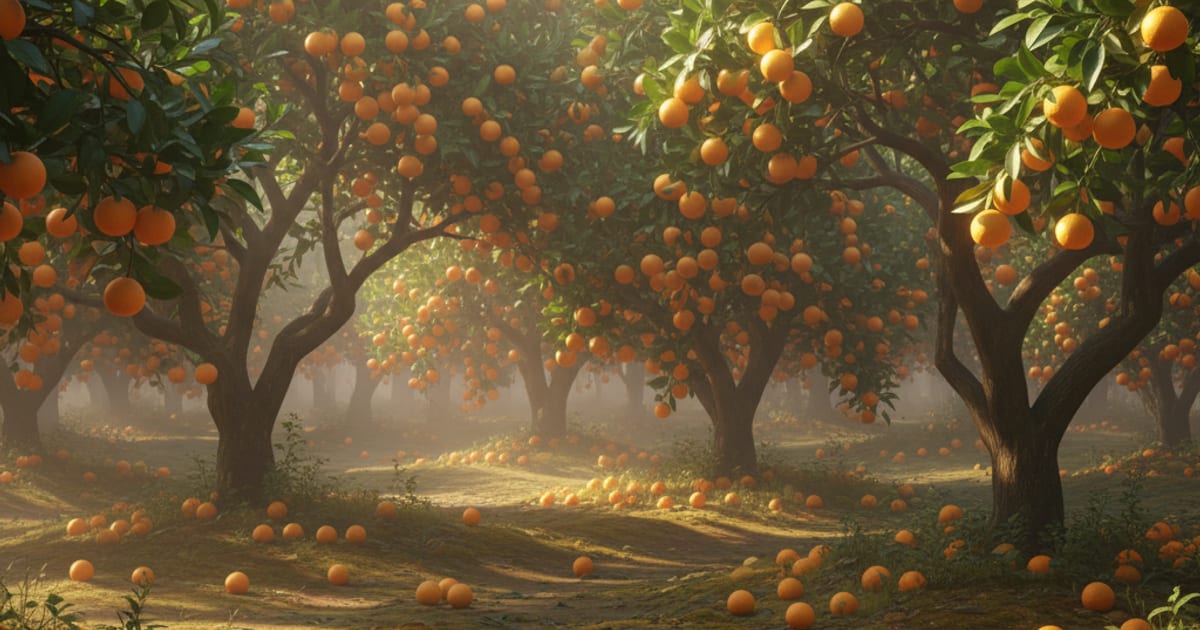
Dreaming of ripe oranges on trees often points to hope that your efforts will pay off, or to satisfaction with something already going well. The oranges can stand for a harvest you want to enjoy, but they are not a promise of money or future success.
What happened in this dream?
One dreamer described seeing two orange trees covered in ripe fruit. The sight felt plentiful and reassuring, as though there was more than enough to pick. Nothing in the scene required a difficult search: the oranges were visible and ready.
The most useful details are the fruit’s ripeness, its place on the trees, and the presence of two trees rather than one. Ripe fruit can bring to mind work that has reached a turning point, while fruit still on the branch may suggest an opportunity you have noticed but not yet taken. Two trees could reflect two projects, two relationships, or simply the dreamer’s impression of plenty; the number does not have a fixed meaning.
Think, too, about what you did. Looking at the oranges, picking them, and eating them are different experiences. If the dream ended before you touched the fruit, the feeling may have been anticipation rather than enjoyment of a result.
What does a dream about oranges usually mean?
You may be waiting for a result
If you have recently finished an application, submitted a project, or worked toward a deadline, ripe oranges can reflect your wish to see a return on that effort. The dream’s contentment may come from feeling that you have done what you can. It does not tell you whether the decision or result will go your way.
This reading fits especially well when the fruit was ready but you left it on the tree. You might be in the interval between completing your part and hearing back. Ask whether the dream gave you relief from that wait or made you impatient to pick something.
More than one part of life may feel promising
Two fruitful trees may fit a week when two areas need your attention: perhaps you are considering a move while a new job possibility opens up, or a friendship is growing alongside a personal project. The dream need not mean you must choose between them. It may simply express the pleasure, or the pressure, of having more than one good thing in view.
If one tree drew your attention more than the other, consider whether one opportunity feels more immediate. If both seemed equally inviting, the dream might reflect a hope that you can make room for both. What matters is how the two trees relate to decisions you actually face.
You may want to feel secure enough to enjoy what you have
A plentiful harvest can also appear when life feels uncertain. During a tight-budget month or while caring for a parent, a dream of abundant food may express a straightforward wish for enough time, energy, or resources. In that case, its hopeful mood matters more than any idea of a coming windfall.
If you woke feeling satisfied, notice whether there is something you are already receiving but rarely pause to appreciate. If you woke worried about losing the fruit, the same scene may speak more to protecting what you have. Both reactions are possible, even with identical orange trees.
How do the details change the meaning?
- The trees are in your own garden: The dream may draw attention to a project, routine, or relationship you have tended over time. It can feel less like discovering luck and more like seeing the results of steady care.
- The trees are somewhere unfamiliar: The oranges may represent an appealing possibility you have not explored yet, such as a new workplace or a move. Notice whether you felt welcome there or unsure you were allowed to take any fruit.
- Someone helps you pick the oranges: The harvest may be tied to shared effort or support, particularly if you have recently relied on a colleague, friend, or family member. If you felt pressured to share, the dream may instead raise a question about expectations.
- You pick or eat a ripe orange: Taking the fruit can shift the focus from waiting for a reward to accepting or enjoying one. Its taste may matter: sweetness could match satisfaction, while disappointment could reflect a result that has not felt as good as you expected.
- The fruit falls or goes bad before you collect it: This version can reflect concern about missing a deadline or letting an opportunity pass. It does not mean you have actually missed your chance; check whether a real task needs your attention.
- The scene feels peaceful, or it feels overwhelming: Peace may point to gratitude or relief. Feeling overwhelmed by all the fruit may point to too many options, obligations, or decisions at once.
What do other dreamers report?
In dreams recorded in Dream Decoder, “abundance” appears in 16 dreams. The emotions people tagged most were hope (25%), joy (25%), satisfaction (25%), and awe (13%). These reports suggest that abundance is often experienced as encouraging or gratifying, though the tags do not tell us what any one orange dream means.
Money was the symbol most often dreamed together with abundance, appearing alongside it in 4 dreams. That makes a financial reading worth considering if money is on your mind this week, but it does not make oranges a prediction about your income. None of those 16 recorded abundance dreams were nightmares (0%); with such a small set, that figure describes these reports rather than a rule about all dreams of abundance.
What should you ask yourself this week?
- What have I recently finished, submitted, or kept working on, and am I waiting to see how it turns out?
- Do the two trees remind me of two specific commitments or opportunities I am balancing right now?
- Did I pick an orange, leave it alone, or worry about whether I could have it? Where did I feel something similar this week?
- Was the strongest feeling contentment, hope, urgency, or worry when I woke? What happened yesterday that might connect to it?
- Is there something good already available to me that I have been too busy to notice or enjoy?
What can you do with the dream?
First, write down the scene while you remember it: two trees, the condition of the fruit, what you did, and the feeling that stayed with you after waking. A few concrete details will be more useful later than settling immediately on a single meaning.
Next, note what happened the day before the dream. A conversation about work, a bill, good news from a friend, or even seeing oranges at a shop may help explain why this particular image appeared. Look for a connection that fits your experience rather than forcing the dream into a prediction.
If the dream helps you notice a real opportunity, choose one small waking-life action, such as checking an application deadline or making time to celebrate a finished task. If a troubling version of the dream becomes a recurring nightmare, you can try rewriting its ending while awake: imagine the fruit staying safe, or picture yourself leaving the trees calmly. The aim is to work with the feeling the dream left you, not to treat it as a forecast.