 Dream Decoder
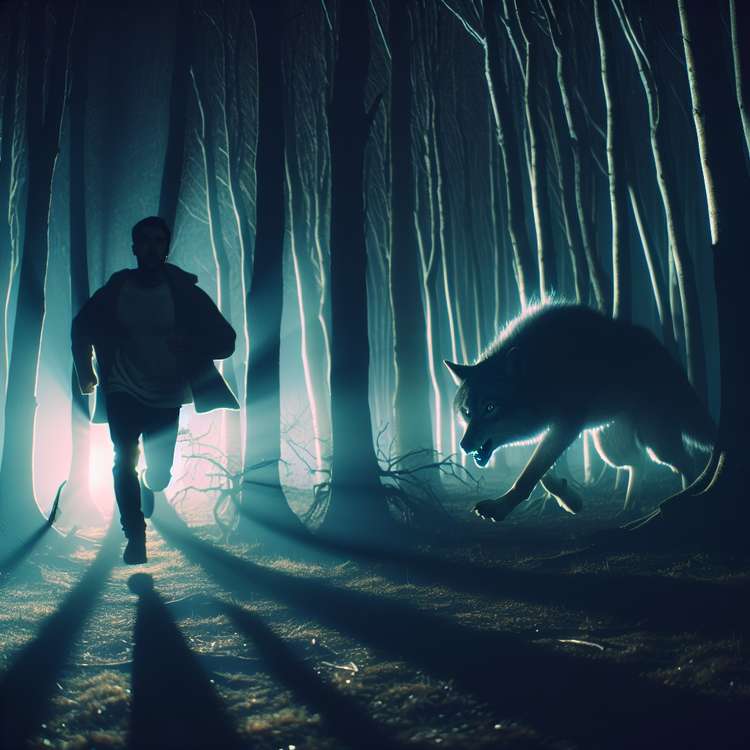
A nightmare about escaping a forest while a wolf is nearby often points to feeling under pressure without a clear way out. The forest can stand for uncertainty, while the wolf gives that uncertainty a shape: a threat you can sense but may not fully understand. It does not mean that something bad is about to happen.
What happened in the dream?
One dreamer described running along a narrow trail at dusk, hiding when a wolf appeared between the trees, then climbing over fallen logs until they reached open ground. The wolf did not attack, but the dreamer kept looking back to see whether it was following.
The important detail is the effort to find a way out. The trees limit what the dreamer can see, and the wolf makes stopping feel unsafe. Together, those details can reflect a waking situation in which you have choices, but none feels easy to assess calmly.
What does escaping the forest usually mean?
A deadline with no clear route through it
If you have a major work or school deadline, the forest may resemble a task with too many steps to see at once. The wolf can represent the consequence you are worried about—a disappointed colleague, a poor result, or simply running out of time. Notice whether the dream focused more on the animal or on not knowing which path to take; those are different kinds of pressure.
A change you cannot yet picture
During a move, a new job, or a change in family responsibilities, familiar routines can disappear before new ones feel secure. In that setting, forest dreams may reflect disorientation rather than danger. Reaching a clearing could express a wish for a definite next step, even if you have not found one while awake.
A person or conversation you would rather avoid
After a breakup, an argument, or a difficult conversation you have postponed, a pursuing wolf can fit the feeling that an issue will catch up with you. That does not make the wolf a stand-in for a particular person: it may represent your fear of the conversation itself. If the wolf only watched from a distance, ask whether you felt threatened by something that had not actually happened yet.
These readings are possibilities, not a test you have to pass. A recent film, a walk in the woods, or a story about wolves could also supply the imagery. The useful question is which part of the dream—being lost, being watched, or finally getting out—matches your week.
How do the details change the meaning?
- The forest is dark and the trail keeps disappearing. Uncertainty may be the strongest feature of the dream. This version can fit a decision where you do not yet have enough information, such as choosing between jobs or waiting for news.
- You know the path, but the wolf is gaining on you. The route is not the problem; urgency is. Think about a known task or conversation that has become harder to put off.
- Someone runs beside you. Notice whether you tried to protect them, relied on them, or feared being slowed down. The dream may connect your own stress to a shared responsibility, such as caring for a parent or coordinating a household move.
- You hide rather than run. Hiding may shift the focus from solving a problem to getting a moment of safety. It can fit a week when you have had little room to pause or think.
- The wolf backs away or leaves you alone. Your fear was real in the dream, but the expected confrontation did not occur. That ending may be worth comparing with a recent worry that turned out differently from what you anticipated.
- You reach open ground but still feel afraid. Getting out does not always bring immediate relief. If this was the ending, consider whether a stressful event has finished while you still feel on alert.
What do dreamers report?
The figures from dreams recorded in Dream Decoder offer context, not a rule for interpreting yours. The forest appears in 41 recorded dreams, and 20% of those dreams were nightmares. That suggests the setting can be frightening, but it is not automatically a nightmare setting.
The emotions people tagged most often for forest dreams were curiosity (34%), fear (29%), anxiety (17%), and wonder (15%). Those different reactions are a reminder to start with how you felt, rather than assuming that trees always mean danger. The wolf and the need to escape may be what made your particular forest frightening.
Forest was most often dreamed together with water (3 dreams), lost (3 dreams), and night (3 dreams). These are small counts, so they cannot tell you what your dream means. They do show why it helps to record the surrounding details: a forest at night may feel very different from one you explore in daylight.
What should you ask yourself?
- What this week has felt hard to navigate: a deadline, a decision, a move, or a conversation?
- Did I fear the wolf itself, or was I more upset that I could not see an exit?
- Was there someone I wanted with me in the dream, or someone I was trying to keep safe?
- Did anything yesterday put forests, wolves, pursuit, or getting lost in my thoughts—even briefly?
- When I woke up, did the strongest feeling resemble something I felt earlier in the week?
What can you do with this dream?
First, write down the dream in a few lines, including its strongest feeling and how it ended. You do not need a polished story; details such as whether the wolf approached or whether you found a path may be more revealing than a general label like “scary.”
Next, note what happened the day before: an unfinished task, a tense exchange, a change of plans, or something you watched or read. The continuity hypothesis is the idea that dreams can draw on waking concerns, so looking for a recent connection is often more useful than assigning every symbol a fixed definition.
If this nightmare recurs, try rewriting its ending while you are awake. You might picture finding a marked trail, reaching a safe place, or realizing you can stop and let the wolf pass; then spend a short time imagining that version. This draws on the idea of imagery rehearsal: you are giving yourself another way to picture the scene, not trying to predict or control what you will dream next.