 Dream Decoder
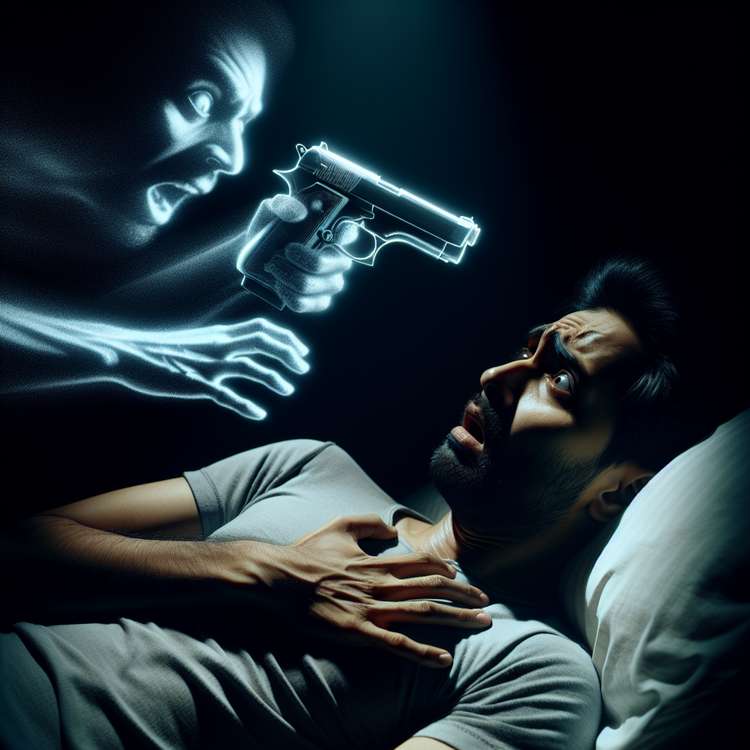
A shooting dream often points to feeling threatened, cornered, or unable to control what happens next—not to an event that is going to occur. The shooting may represent a sudden conflict, a frightening change, or a real fear you encountered recently; the most useful clue is what you felt and did in the dream.
What happened in the dream?
One dreamer described being in a busy school hallway when a shot rang out. They ran, tried to reach someone who had fallen, hid behind a locker, and finally escaped outside before waking with their heart racing.
The important details are the crowded setting, the split-second choice between helping and hiding, and the relief of getting out. A school can evoke old memories of being judged or unprepared, but it might simply be a familiar place for a frightening scene. The dreamer’s actions matter more than any fixed meaning assigned to the building or the gun.
What does a shooting dream usually mean?
A situation feels suddenly out of your control
A shooting interrupts ordinary life without warning. If you are facing a deadline, waiting for test results, or dealing with an unpredictable person at work, the dream may give that sense of uncertainty an extreme form. Ask whether the fear was about the danger itself or about having no time to decide what to do.
You feel caught between protecting yourself and helping someone
Trying to help and then hiding can reflect a familiar conflict: you care about someone, but you cannot do everything for them. Caring for a parent, supporting a friend through a breakup, or covering a coworker’s responsibilities can all create that tension. Hiding in the dream does not mean you lack courage; in a threatening scene, seeking safety is an understandable response.
Something you saw or heard stayed with you
A news story, a film, a conversation about violence, or a safety drill can supply a dream with its setting and imagery. In that case, the shooting may say less about a hidden conflict than about what made an impression on you that day. Consider this possibility especially if the dream followed a specific reminder and does not match an ongoing worry in your life.
None of these readings is a verdict. A vivid nightmare is not evidence that you want harm to come to anyone, nor is it a warning that a shooting will happen.
How do the details change the meaning?
- It happens at school: Notice whether school currently means responsibility, social pressure, or an experience from your past. If you work or study there now, the location may be literal rather than symbolic.
- It happens in your home: The fear may connect more closely to privacy, family tension, or the feeling that a normally safe place has become unsettled. A recent move can make home appear unfamiliar in dreams.
- You know the person in danger: Your concern may center on that relationship, especially if you have worried about them this week. Their presence does not predict anything about their safety.
- You cannot move or call out: The feeling of being stuck may resemble a waking situation in which you have little say, such as an unresolved decision at work. If it occurred as you were waking, it is also worth distinguishing the dream from a brief sensation of waking paralysis.
- You get away or help someone: The ending may draw attention to relief, responsibility, or a choice you wish you could make with more certainty. Compare how you felt afterward rather than assuming escape and helping have opposite meanings.
- You recognize the shooter, or you are holding the gun: Recognition may bring a particular conflict to mind; being the one holding it may raise questions about anger or power. Neither detail, on its own, tells you what you intend to do in real life.
What is known about dreams like this?
Dreams can draw on recent experiences, older memories, emotions, and things encountered in media, combining them into scenes that never happened. Researchers sometimes call the tendency for waking concerns to appear in dreams the continuity hypothesis. It offers a reason to check what has been weighing on you, not a method for translating every image into one exact meaning.
Nightmares often involve danger and intense fear, which can remain noticeable after waking. One proposed explanation, threat simulation theory, suggests that dreaming can involve rehearsing responses to danger. That is a theory about a possible function of some dreams, not proof that a particular shooting dream is preparing you for a real event.
Dreams occur in different stages of sleep, although vivid, emotional stories are commonly associated with REM sleep. The familiar feeling of running too slowly, freezing, or failing to help can make a nightmare especially upsetting. It does not, by itself, reveal a character flaw or a hidden wish.
Research cannot tell you from the word “shooting” alone whether your dream came from stress, a memory, or something you watched. Your recent experiences and your feelings in the scene provide better context than a universal dream dictionary.
What should you ask yourself about this week?
- What was the strongest feeling when I woke: fear, helplessness, guilt, anger, or relief? Did I feel anything similar during the past few days?
- Was there a deadline, argument, sudden change, or difficult decision this week that left me feeling unprepared?
- Did I recently see or hear something involving a gun, a school, a crowd, or a person needing help?
- In the dream, was I most focused on escaping, finding someone, or making a choice? Where has that same concern appeared in my waking life?
- Does the location or any person in the dream have a specific association for me, beyond what it might mean to someone else?
What can you do with the dream now?
First, write down a few details while they are fresh: where you were, what happened, what you did, and the feeling that lasted after waking. You do not need to reconstruct every moment. A brief account makes it easier to notice which part of the nightmare actually stayed with you.
Next, note what happened the day before. Include ordinary things as well as obvious stressors: a conversation, a piece of news, an upcoming obligation, or a change in routine. If no connection stands out, leave the question open rather than forcing one.
If the nightmare recurs, try writing a different ending while awake. You might imagine finding an exit, reaching a safe place, or having help arrive, then picture that revised scene for a few minutes; this approach is known as imagery rehearsal. The point is not to prove what the dream means, but to give yourself another version of the story to return to.