 Dream Decoder
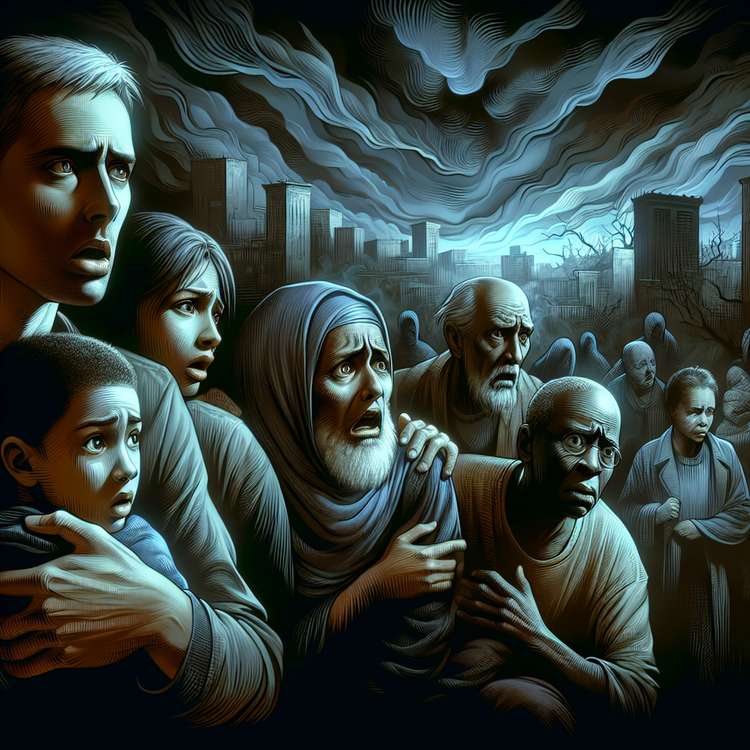
A nightmare about violence and other humans often points to feeling threatened, overwhelmed, or unable to control a tense situation—not to a wish for violence. The people in it may matter because of who they are, or because they represent the pressure of dealing with other people right now.
What happened in the dream?
One dreamer described walking along a familiar city street when a crowd turned hostile. They tried to protect someone, struggled to get away when another person grabbed them, and woke feeling frightened and unsure whether they had done enough.
The important details are the shift from familiar to unsafe, the presence of other people, and the dreamer’s attempts to act despite feeling slowed down. If your dream followed a different sequence, focus less on matching its events and more on your role: Were you trying to escape, intervene, find someone, or make sense of what was happening? That role can offer a clearer clue than the violence itself.
The heavy-legged feeling is also common in frightening dreams. It can make a threat feel impossible to manage, even when the dreamer is trying hard to respond. It is not evidence that you would freeze or fail to help someone in waking life.
What does a dream about violence and humans usually mean?
You feel under pressure from other people
If you are facing a work deadline while colleagues make competing demands, a hostile crowd can resemble the feeling of having too many people to answer to. The dream may turn social pressure into immediate danger because fear is a forceful way for a sleeping brain to stage tension. Ask whether you felt watched, blamed, or outnumbered this week, even if nobody actually threatened you.
A conflict feels hard to navigate
After an argument with a friend, a breakup, or a dispute at home, a dream about intervening in violence may reflect the strain of choosing when to speak and when to step back. Recognizable faces do not necessarily mean those people are dangerous; they may be linked to the conflict or to your concern about their reactions. Notice whether the dream centered on what others did or on your uncertainty about your own next move.
You are worried about someone’s safety or well-being
Caring for a parent, hearing troubling news, or helping a friend through a difficult week can leave you alert to what might go wrong. Trying to shield someone in a nightmare may echo that sense of responsibility, especially if you woke thinking you should have done more. The dream is not a prediction; it may be an exaggerated version of a real worry you are carrying.
These readings can overlap. The continuity hypothesis—the idea that dreams often draw on waking concerns—is useful here, but it does not turn every detail into a coded message. Sometimes the simplest link is a stressful conversation, a disturbing story you encountered, or a day when you felt unusually on edge.
How do the details change the meaning?
- A familiar place turns unsafe: A street, workplace, or home you know may point toward a part of daily life that no longer feels as predictable as it did. Consider what has recently changed there, rather than assuming the location itself is a warning.
- The people are strangers: The dream may be less about a particular relationship and more about feeling exposed in public, facing a new group, or not knowing what others expect of you.
- Someone you know appears: Think about your current connection with them. Their presence may bring up an unresolved disagreement, concern for them, or an emotion you associate with them—not a claim about their intentions.
- You try to help someone else: The focus may be responsibility. This can fit a week spent mediating a disagreement, supporting a friend, or trying to keep a group situation calm.
- You cannot move quickly or call for help: That detail can sharpen a sense of helplessness, such as being stuck waiting for a decision about a move or a job. It does not say anything reliable about how you would act in a real emergency.
- You escape but wake feeling guilty: The lingering feeling may be more revealing than the ending. Ask whether you have recently set a necessary boundary and then questioned whether you were allowed to put yourself first.
What do other dreamers report?
In dreams recorded in Dream Decoder, violence appears in 51 dreams, and 67% of those dreams were nightmares. The emotions people tagged most were fear (76%), anxiety (35%), helplessness (31%), and shock (22%). Those tags suggest that distress and a loss of control are common experiences in these reports; the percentages need not add up to 100% because a dream can have more than one emotion.
Violence was most often recorded alongside death (10 dreams), beating (5), attack (5), shot (4), and family (4). That mix suggests dreamers describe both danger and concern involving people close to them. These are counts from dreams recorded in Dream Decoder, not estimates of how often everyone has such dreams or proof of any one meaning.
What should I ask myself about this dream?
- What happened the day before? Was there an argument, a deadline, upsetting news, or a situation in which you felt cornered?
- Who felt familiar in the dream? If you recognized someone, what has your relationship with them felt like this week?
- What was I trying to do? Were you protecting someone, getting away, asking for help, or trying to calm people down—and where has that role shown up recently?
- Which feeling stayed after waking? Fear, helplessness, guilt, and anger can point toward different parts of the same situation.
- Was there a moment when I had a choice? If you keep replaying it, does it resemble a decision you are facing now or one you wish you could revisit?
What can I do with this dream now?
- Write down the dream and the feeling together. Record a few details you remember—where you were, who was there, what you tried to do—and name the strongest feeling on waking. You do not need a perfect account; the parts that stick with you are enough to work with.
- Look back one day, then one week. Note what happened before bed and whether an ongoing situation has left you feeling responsible, pressured, or unsafe. If a connection comes to mind, consider one ordinary action you can take, such as clarifying a deadline or having a calm conversation; you do not have to solve the dream itself.
- If the nightmare repeats, try a different ending while awake. Write a brief version in which you reach safety, find help, or leave the scene, then picture that ending for a few minutes during the day. This approach, often called imagery rehearsal, gives you a less frightening version to return to without treating the original dream as a prediction.