 Dream Decoder
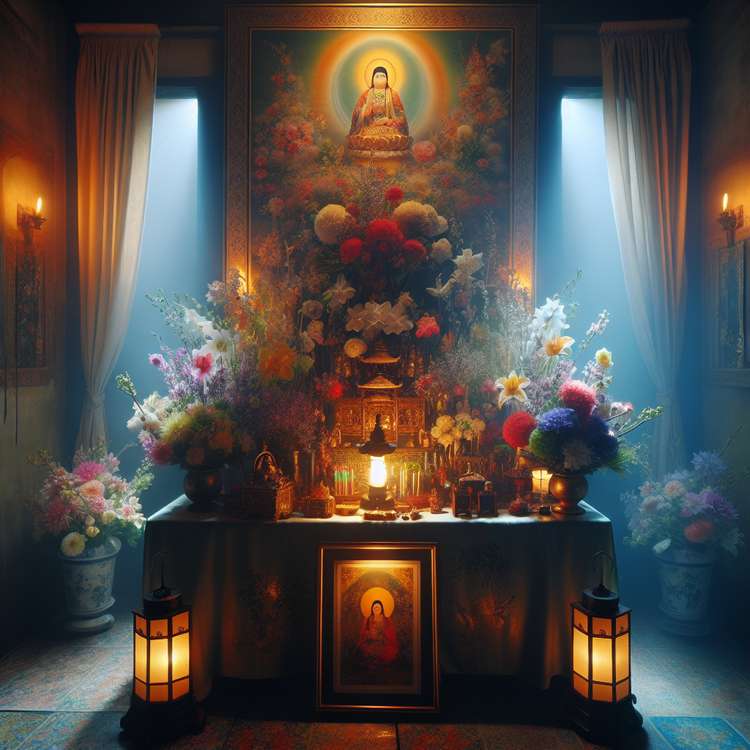
A dream of puja and ancestors often points to a need for connection: to family, a spiritual practice, or a sense of guidance during change. If it felt prophetic, take that feeling seriously as an experience, but not as proof that the dream predicts an event. The most useful clue is usually what the ritual and the ancestor meant to you this week.
What happened in this dream?
One dreamer described entering a courtyard at dusk, offering flowers before images of Ganesh and Mahadev, and lighting a lamp while distant voices chanted. An older relative appeared nearby, recognizable despite being someone the dreamer barely remembered; the dream ended without a message, but with a strong sense of having been invited to listen.
Several details matter more than the setting alone. The dreamer participated in puja rather than merely watching it, spoke an ancestor’s name, and received no explicit instruction. That combination may reflect a wish to do something meaningful about a family connection or a personal concern, even if the next step is unclear.
The absence of words is worth noticing. If you woke expecting a prophecy, you might be tempted to supply a message the dream never gave. Try separating what you actually saw and felt from what you thought it meant after waking.
What does a dream about puja and ancestors usually mean?
You want steadiness during a change
If you are facing a move, an exam, a job deadline, or another unfamiliar situation, a familiar ritual can represent steadiness. Lighting a lamp or making an offering may express a wish to approach the change with care rather than rush into it. Ganesh, whom many devotees honor when beginning something, may feel especially relevant if you are about to start a new chapter.
Ask whether the dream’s calm or solemn mood matches what you have been missing while awake. It need not mean an obstacle will appear; it may simply show how much you want a grounded beginning.
A family relationship needs attention
An ancestor may come to mind around a death anniversary, a family gathering, a conversation about your upbringing, or a period of caring for a parent. The relative in the dream might stand for a particular person, a story you wish you knew, or your place within the family. If the encounter felt comforting, you may be remembering support; if it felt strained, you may have unfinished questions.
You do not have to identify every relative in a dream to learn from it. Notice whether a name, photograph, recipe, or recent family conversation brought that person or generation close to mind.
You are reconsidering what spiritual practice means to you
Puja can feel natural to someone who practices regularly, unfamiliar to someone raised around it, or newly significant to someone returning after time away. During a breakup or a period of uncertainty, dreaming of worship may express a desire for belonging, not necessarily a command to change your beliefs. If the dream felt sacred, you can respect that feeling without deciding at once that it carried a supernatural message.
Which details change the meaning?
- A familiar family home or shrine: This often draws attention to inherited customs and specific memories. Ask whether the place resembles somewhere you recently visited, discussed, or missed.
- An unfamiliar temple or courtyard: An unknown place may put the emphasis on seeking direction rather than revisiting a particular memory. Notice whether you felt welcomed there or unsure of the rules.
- An ancestor who speaks: Write down the exact words before interpreting them. A clear sentence may reflect a concern already on your mind; do not treat dream speech as an obligation or a forecast.
- An ancestor who stays silent: Silence can leave room for grief, curiosity, or a wish for reassurance. Your reaction to it matters more than guessing what the person ‘meant’ to say.
- A lamp that stays lit—or goes out: A steady flame may accompany a feeling of confidence, while a failed or extinguished flame can echo worry about doing something correctly. Neither detail predicts whether a real-life undertaking will succeed.
- A peaceful ending versus a frightening one: Peace may make the dream feel like comfort or remembrance. Fear may point instead to pressure around family expectations, religious duties, or an unresolved situation that deserves your attention while awake.
What do we know about dreams like this?
Dream research does not offer a fixed dictionary in which puja, a lamp, or an ancestor has one meaning for everyone. The continuity hypothesis suggests that dreams often draw on waking concerns, relationships, and experiences, although dream scenes can combine them in unexpected ways. A recent ritual, photograph, festival, or conversation may supply imagery without fully explaining why it felt powerful.
Dreams can be emotionally intense and convincing, whether they occur during REM sleep or other sleep stages. That intensity does not establish that a dream predicts the future. It does tell you that the experience mattered to you, which is a good reason to record it accurately before memory changes it.
Religious interpretations also differ among families and traditions. Puja to Ganesh or Mahadev and remembrance of ancestors may have different places in someone’s practice; one dream does not erase those distinctions. If you want a religious reading, consider asking a trusted person within your tradition rather than relying on a universal symbol list.
What should you ask yourself about this week?
- What began, ended, or became uncertain this week—a deadline, a move, a relationship change, or a family responsibility?
- Did I see a photograph, attend a ceremony, hear a prayer, or talk about an older relative in the day or two before the dream?
- Which moment carried the strongest feeling: making the offering, lighting the lamp, seeing the ancestor, or leaving?
- Did the ancestor remind me of a specific relationship, or more generally of what my family expects from me?
- Am I calling the dream prophetic because it contained a clear message, or because the feeling after waking was unusually strong?
What can you do with the dream now?
- Write down what happened before interpreting it. Record the setting, who was present, any exact words, and how you felt during the dream and on waking. Mark uncertain details as uncertain rather than filling gaps with what seems likely.
- Check the day before. Note any family news, worship, music, images, or conversations that could connect to the dream. If you want to honor the experience, choose a small action that fits your own practice, such as remembering the relative or speaking with someone who knew them; there is no need to act on a supposed prediction.
- If it becomes a recurring nightmare, try a different ending while awake. Write a brief version in which you can leave safely, ask a question, or receive help, then rehearse that version in your imagination. This approach, called imagery rehearsal, is about changing your relationship to a distressing dream, not proving what caused it.