 Dream Decoder
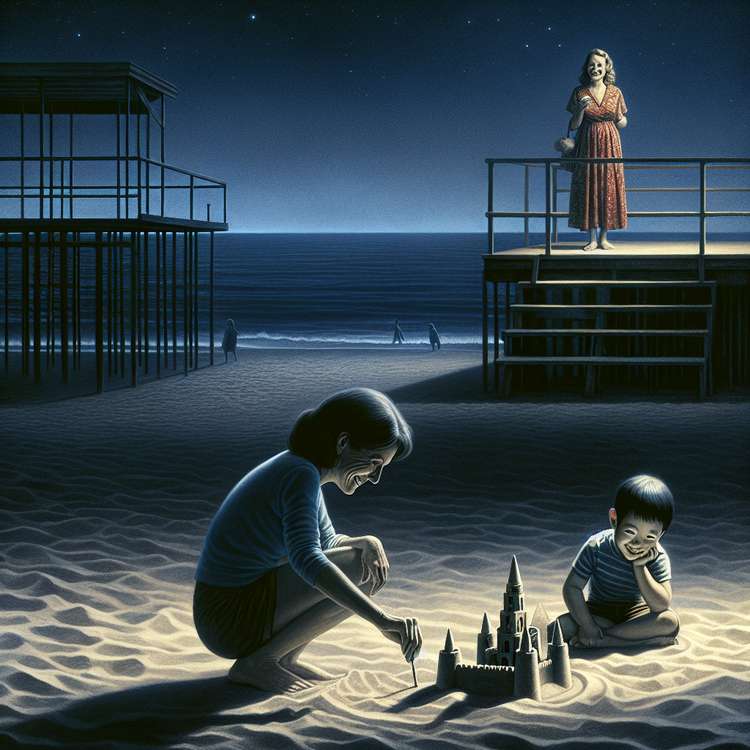
A dream about play often points to how much room you have for enjoyment, creativity, and trial and error in waking life. If playing felt difficult or exposed, the dream may also reflect pressure to do something well when you would rather be free to experiment.
What happened in the dream?
One dreamer described standing barefoot on a bright stage, holding a toy and trying to play a familiar tune. Children joined in; the dreamer paused to help one of them, changed the stage lighting, and later built and knocked down a small structure in a backyard sandbox. The mood moved between delight and nervousness.
The useful detail is not simply that the dreamer played. They played while being watched, made space for other people, interrupted the performance to help someone, and then started again. Those shifts raise different questions: Is play something you enjoy for its own sake, or does it become another thing you feel you must get right?
The sandbox adds a quieter contrast to the stage. Onstage, other people can see what you make; in the sandbox, the dreamer can build something fragile and let it fall without an audience. If that contrast stayed with you after waking, it may be more useful than trying to assign a fixed meaning to the toy or the tune.
What does a dream about play usually mean?
You want permission to try without being good at it
If your week has been full of deadlines, assessments, or a project with visible results, playing in a dream can reflect a wish to experiment without being judged. The stage and hesitant first notes fit this reading especially well: the enjoyable activity begins to feel like a performance. Consider whether a hobby, friendship, or new skill has recently acquired an audience in your mind, even if nobody has actually asked you to impress them.
You are balancing your own needs with other people’s
If you are caring for a parent, looking after children, training a new colleague, or carrying extra responsibilities at home, the moment of stopping to help a child may stand out. It can suggest that even your leisure time feels shared or interrupted. That does not make helping a burden; the question is whether you also get a turn to play without being in charge.
Something is changing, and you are testing what can be rebuilt
During a move, a career change, or the end of a relationship, building in sand and letting it collapse may echo the feeling of making plans that cannot stay fixed. Because the collapse is gentle in this dream, it can also suggest curiosity rather than loss. Changing the backdrop offers a similar possibility: you may be trying out a different setting or role while remaining recognizably yourself.
These readings are alternatives, not a checklist to satisfy. The one that fits is the one that connects to something specific in your recent life and to the feeling you had in the dream.
How do the details change the meaning?
- You are playing alone at home: The dream may be less about approval and more about private pleasure, rest, or a part of your day that belongs only to you. Notice whether being alone felt peaceful or lonely.
- You are playing on a stage: An audience can shift the focus toward visibility. If you have a presentation, audition, family gathering, or difficult conversation coming up, ask whether you expect to be watched more closely than usual.
- Children join you: Their presence can point toward shared enjoyment, teaching, or the effort of making room for someone else. If you felt crowded rather than happy, the same detail may reflect a lack of uninterrupted time.
- You cannot remember how to play the tune: This can fit a week when you are returning to an old skill or role and worry you have lost your ease with it. Forgetting in a dream is not evidence that you have actually lost that ability.
- You break what you built and feel relieved: The sandbox scene may be about letting an experiment end. If you felt upset instead, it may resemble frustration over work or plans that have not held together.
- The dream ends when you start again: Returning to play after a pause can draw attention to persistence. The pause matters too: did helping someone or changing the setting make it easier to continue?
What do we know about dreams like this?
Dream research does not provide a reliable dictionary in which play, a stage, or a toy has one meaning for everyone. A more grounded starting point is the continuity hypothesis: dreams often draw on concerns, activities, relationships, and emotions that are present in waking life. That does not mean every dream scene is a disguised report of something that happened.
Dreams can combine familiar people and places in ways that do not follow ordinary logic. A stage becoming a backyard, for example, need not be decoded as a secret message; the change may bring together different feelings about being seen and being free to experiment. Your emotional response is usually a better clue than whether every physical detail makes sense.
Researchers also study dreaming in relation to memory and emotion, but a single dream cannot establish why it occurred. You may recognize a trace of yesterday’s conversation, an older memory, or a current worry; you may recognize none of them. Treat a possible connection as a useful question, not as proof that the dream has identified a hidden problem or predicted an event.
What should you ask yourself this week?
- Where did I feel watched or evaluated this week, and did I enjoy what I was doing before that pressure appeared?
- Have I spent time on anything playful lately without needing to improve at it or show someone the result?
- Who has needed my help recently, and how did I feel about stopping what I was doing to give it?
- Is there a plan, project, or routine I am trying to keep intact even though it may need to change?
- Which feeling followed me into the morning: excitement, embarrassment, relief, tenderness, or something else? What in my week has felt similar?
What can you do with the dream?
First, write down the scene in a few lines, including how you felt at the start, when others joined, and when the setting changed. Those transitions may tell you more than a long inventory of objects. If only one image remains clear, record that rather than trying to fill in missing details.
Next, look at the day before the dream. Note any performance pressure, time spent helping someone, or chance to play that you accepted or passed up. You do not need a perfect match; one concrete link is enough to make the reflection useful.
Finally, choose a small waking-life experiment if a reading rings true. You might spend ten minutes on a hobby with no finished product in mind, or make space for an activity that does not require you to lead anyone else. If this dream instead keeps returning as a frightening nightmare, you can write a different ending while awake and imagine it a few times; this is sometimes called imagery rehearsal.